


On the Timeless Language of the Human Form: The classic Figure Study

As a fine art photographer, I often find myself suspended between two powerful impulses: the desire to create something truly unique, and the equally strong pull to honor the traditions that shaped the medium. Innovation and reverence exist in constant dialogue. On one hand, I deeply admire contemporary photographers who push forward with unmistakably personal visions, carving out new visual languages and redefining what photography can be. On the other, I remain endlessly inspired by the old masters whose work continues to resonate across generations.
Artists such as Edward Weston, Ruth Bernhard, and Horst P. Horst have influenced me in ways that feel both technical and philosophical. Their photographs possess a quiet authority—a sense of intention, restraint, and devotion to form. They remind me that powerful images do not rely on excess, but on clarity. On attentiveness. On the ability to see what others might overlook.
Of course, my own work is created in a very different context. Today’s tools, workflows, and digital processes place my photography far from the darkrooms and materials that defined earlier eras. Yet while the methods have changed, the spirit that animates my work often feels closely aligned with theirs. It is in that lineage—rather than in imitation—that I find much of my creative energy.
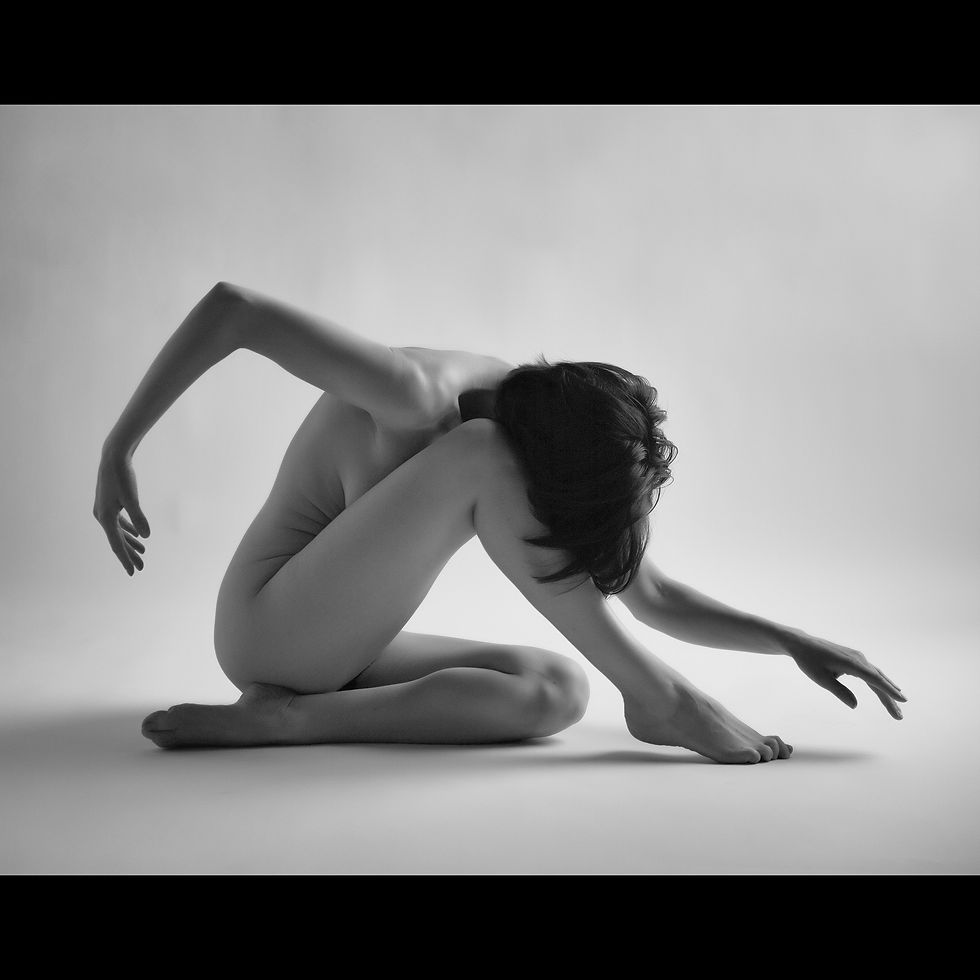
This connection is especially present in my approach to the figure study. There is something timeless about exploring the human form through light and shadow. When stripped of distraction, the body becomes a landscape: planes, contours, negative space, and rhythm. A subtle shift in lighting can transform skin into stone, muscle into horizon, curve into architecture. The possibilities feel almost endless, not because the subject changes, but because perception does.
I am continually drawn to how light reveals and conceals at once—how it sculpts texture, suggests depth, and invites the eye to move slowly across an image. In these moments, photography becomes less about documentation and more about discovery. Less about the figure as an object, and more about form as an experience.
This is, in many ways, a very basic approach to the classic figure study. There are no elaborate sets or grand narratives—only the interplay between body, light, and shadow. Yet I find the results profoundly rewarding. They reconnect me to the essence of the medium and to the enduring questions that artists have explored for centuries: how to see, how to simplify, and how to find something new within what is eternally human.



Comments